Search Results - Land
Land
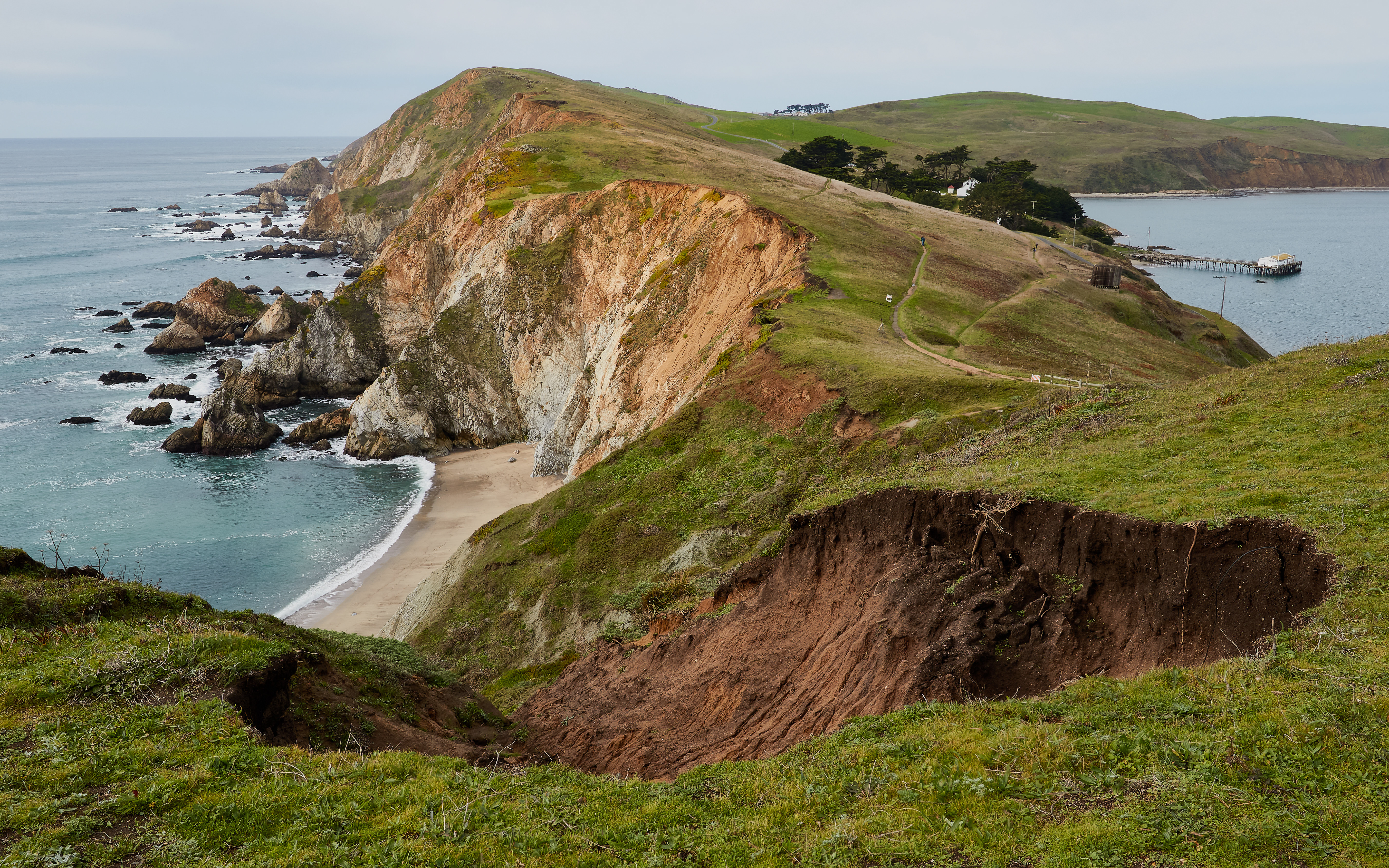 Land, also known as dry land, ground, or earth, is the solid terrestrial surface of Earth not submerged by the ocean or another body of water. It makes up 29.2% of Earth's surface and includes all continents and islands. Earth's land surface is almost entirely covered by regolith, a layer of rock, soil, and minerals that forms the outer part of the crust. Land plays an important role in Earth's climate system, being involved in the carbon cycle, nitrogen cycle, and water cycle. One-third of land is covered in trees, another third is used for agriculture, and one-tenth is covered in permanent snow and glaciers. The remainder consists of desert, savannah, and prairie.
Land terrain varies greatly, consisting of mountains, deserts, plains, plateaus, glaciers, and other landforms. In physical geology, the land is divided into two major categories: Mountain ranges and relatively flat interiors called cratons. Both form over millions of years through plate tectonics. Streams – a major part of Earth's water cycle – shape the landscape, carve rocks, transport sediments, and replenish groundwater. At high elevations or latitudes, snow is compacted and recrystallized over hundreds or thousands of years to form glaciers, which can be so heavy that they warp the Earth's crust. About 30 percent of land has a dry climate, due to losing more water through evaporation than it gains from precipitation. Since warm air rises, this generates winds, though Earth's rotation and uneven sun distribution also play a part.
Land is commonly defined as the solid, dry surface of Earth. It can also refer to the collective natural resources that the land holds, including rivers, lakes, and the biosphere. Human manipulation of the land, including agriculture and architecture, can also be considered part of land. Land is formed from the continental crust, the layer of rock on which soil, groundwater, and human and other animal activity sits.
Though modern terrestrial plants and animals evolved from aquatic creatures, Earth's first cellular life likely originated on land. Survival on land relies on fresh water from rivers, streams, lakes, and glaciers, which constitute only three percent of the water on Earth. The vast majority of human activity throughout history has occurred in habitable land areas supporting agriculture and various natural resources. In recent decades, scientists and policymakers have emphasized the need to manage land and its biosphere more sustainably, through measures such as restoring degraded soil, preserving biodiversity, protecting endangered species, and addressing climate change. Provided by Wikipedia
-
1
-
2
-
3
-
4
-
5
-
6
Pembangunan tanah di Malaysia menempa kemakmuran di bumi bertuah...
Published 2007“…Federal Land Development Authority (FELDA)…”
Book -
7
In Doublet and Hose A Story for Girls
Published 2009Other Authors: “…De Land, Clyde Osmer, 1872-1947…”
Get full text
Rights
Electronic eBook -
8
Pakistan's tactical nuclear weapons conflict redux
Published 2014“…Centre for Land Warfare Studies (New Delhi, India)…”
Book


-
9
-
10
Limited wars in South Asia need for an Indian doctrine
Published 2010“…Centre for Land Warfare Studies (New Delhi, India)…”
Book